Lane Etiquette
Proper lane etiquette ensures a safe, efficient, and enjoyable training session for everyone. Whether you’re leading the lane, overtaking, or finishing your swim, it’s essential to maintain awareness of others and follow these guidelines to avoid accidents and disputes.
Leading the Lane
Quickest Swimmer Leads: The fastest swimmer for the stroke or drill should lead the lane, followed by swimmers in descending speed or technical ability. This helps maintain smooth lane flow and prevents hold-ups.
Safe Swimming Distance: Start each set or rep at least 5 to 10 seconds after the swimmer in front. This ensures a safe distance is maintained. This means that you do not leave the wall until the swimmer’s feet have left the red zone (5 seconds or 5m) and before they reach the 1st gold rings (10seconds or 10m).
Changing Strokes/Drills: The order may change when switching strokes or drills; adjust the lane order accordingly.
Understanding the Set: The lead swimmer should ensure they fully understand the drill or set and start at the correct time while monitoring the pace clock. They should also keep track of the number of sets or reps completed.
Awareness in the Lane
Stay Aware of Other Swimmers: Safety is the top priority. Always be aware of where other swimmers are, especially when training hard.
Swim on Your Side of the Lane: Avoid drifting toward the centerline to reduce the risk of collisions.
Swimmers should swim down one side of the land and back on the other side of the lane.
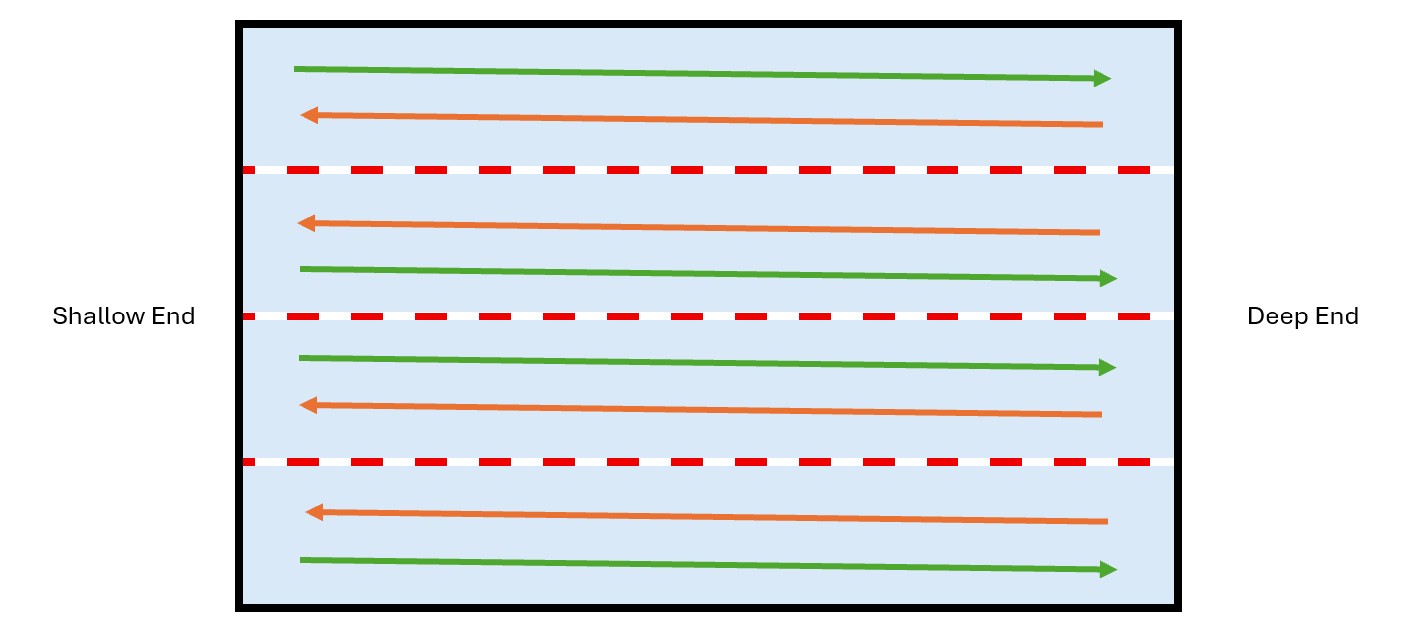
Only swim down the “racing line” or “blue line” if instructed to do so by a coach.
Swimming Butterfly: When passing another swimmer in the opposite direction, perform a single-arm butterfly to avoid collisions.
Swimming Breaststroke: Take care when performing the breaststroke kick, as it requires significant force that could accidentally injure other swimmers.
Lane Disapline
Resting at the Wall: When stopping at the end of the pool, move to the side of the lane to allow other swimmers to finish safely. Avoid encroaching on adjacent lanes.
Don’t Start Too Close: Do not begin swimming immediately before another swimmer who is about to turn. Recommence training only when it is safe to do so.
No Stopping Mid-Lap: Avoid stopping in the middle of the lane. Adjust your goggles or cap at the end of the pool, not mid-length.
Leave Proper Gaps: Watch the pace clock and ensure a 5 to 10-second gap before starting a new set or rep. This ensures a safe environment and allows swimmers to perform drills at their best pace.
Overtaking
Be Patient When Overtaking: If you need to pass someone, do not swim over them. Instead, gently tap their feet (do not slap or pull), and then slow down and pull back slightly. Once tapped, the swimmer should continue to the wall, then wait in the corner while the overtaking swimmer turns and pushes off.
When Overtaken: If someone taps your feet, allow them to pass by stopping at the wall and waiting until they have turned. Leave a 5 to 10-second gap before resuming your swim. If swimmers are swimming in close file, you must wait for all swimmers to pass you.
Avoid Overtaking Mid-Pool: Don’t attempt to overtake mid-length unless you are certain it is safe and that you can maintain the speed to do so.
Respectful Spacing: Avoid swimming too closely behind the swimmer in front to prevent drafting, which reduces your effort and can be frustrating for the swimmer ahead.
Turning and Finishing
Turning: When approaching the wall, shift from your side of the lane to the centre, execute the turn, and push off to the other side of the lane. Be aware of other swimmers when kicking off the wall.
Finishing: Always swim all the way to the wall. Do not stop short, as incoming swimmers could collide with you. After touching the wall, move aside to allow others to finish.
General Tips for a safe enjoyable session
Be Aware: Always know where others are in the lane, and adjust your swimming accordingly.
Know you swimming speed: Position yourself accordingly in the lane.
Leave Gaps: Keep proper spacing between yourself and others when starting a new set.
Respect Others: Everyone has different abilities; respect those in your lane to ensure an enjoyable training session for all.
Adhere to Lane Rules: Follow the instructions and guidelines given by coaches to ensure that everyone benefits from a safe and productive session.